Niagara College has launched a new program that teaches students how to determine whether a ship will actually fit through the Welland Canal. Its first cohort of 28 students began classes at the Welland Campus this week.
The two-semester Vessel Fit Determination program is an Ontario College Graduate Certificate and includes a 14-week field placement along the canal. Applications for the January intake are now open through ontariocolleges.ca.
“Niagara College has always built programs around the industries that make this region what it is,” said Kevin Romano, the program’s coordinator. “We had brewing. We had winemaking. We had distilling. When we looked at what else people in Niagara do every day, fit determination was the obvious gap.”
What students will learn
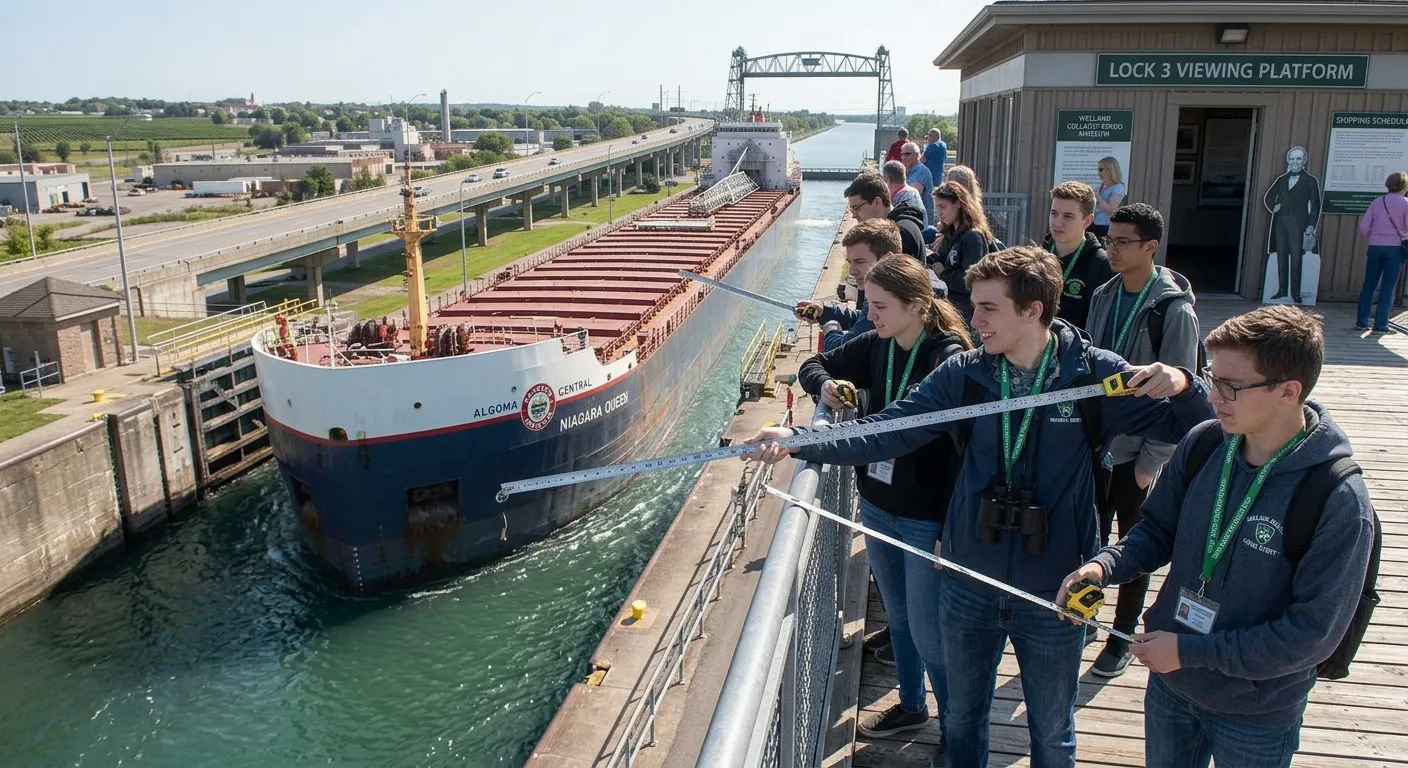
The locks on the Welland Canal are 24.4 metres wide. The largest ships allowed through are 23.8 metres wide, which leaves about a foot of space on each side. The college says this margin has created steady local demand for people who can look at an approaching freighter and form an opinion about it.
According to the program’s web page, graduates will be able to:
- Estimate a vessel’s width from up to 400 metres away
- Compare that estimate to the width of a lock
- Communicate a fit determination to family members, tourists, and strangers
- Revise a fit determination as the vessel gets closer
- Apply professional judgment in fog, rain, and high winds
Much of the hands-on training will take place in the college’s new Clearance Simulation Lab. The lab houses a 1:50 scale model of Lock 3, a fleet of model lake freighters, and an adjustable-width chamber that Romano said lets instructors “introduce doubt at controlled levels.” The lab will be used heavily during the canal’s winter closure.
Built with industry
Like all Ontario college programs, Vessel Fit Determination was developed with a program advisory committee. This one is made up of 11 residents who have stood at the Lock 3 viewing platform in St. Catharines for a combined 380 years.
“For decades, people just picked this up,” said committee chair Gord Van Egmond, 71. “Your dad took you down to the lock, he told you she wasn’t going to make it, and that was your training. There were no standards. Anybody could say it.”
First-year student Brianna Colasanti, 24, of Thorold, previously completed a diploma in business administration. She said the new program finally gave her family’s tradition some legitimacy.
“My grandpa does this. My uncles do this. My mom does it from the car,” she said. “But none of them can put it on a résumé.”
Career outcomes
The college lists graduate career paths including visitor experience roles at canal attractions, lock-side fit consulting, ship-spotting content creation, and freelance determination.
Starting salary figures are not yet available. The college’s labour market analysis found strong regional demand for fit determination, but it noted that nearly all of that work is currently unpaid.
The launch comes as Ontario colleges have cut and suspended programs following federal limits on international study permits. Romano said the new certificate was well positioned to succeed in that climate.
“Right now every new program has to make a case for itself,” he said. “This one makes its case every time a ship comes up the canal.”
The college is already developing a part-time weekend micro-credential for working professionals. Romano said weekends are “when most of the region’s fit determination currently takes place.” He added that the college is exploring a pathway for students interested in advanced study of how long a bridge will stay up.
On Wednesday, the cohort’s first field trip to Lock 3 was delayed 20 minutes when the bus was stopped at a lift bridge in Thorold for a passing freighter. Romano said the class used the time to complete an unscheduled assessment.
Twenty-six of the 28 students determined the ship would not fit. Romano described this as “right in line with the regional average.”
It fit.